Last updated:
What Are the Limits of Private Investigations in Australia?
You might be trying to find a missing relative, confirm a cheating partner, or work out who’s been taking stock at work. In those moments, hiring a Private Investigator can feel like turning on a light in a dark room.
But a PI isn’t above the law, and they can’t “just get” anything you ask for. The rules also change by state and territory, so what’s fine in one place may cross the line in another. Here’s what the limits look like in plain terms, so you can hire help with confidence.
The legal line in Australia, licensing, consent, and why your state matters
Private investigations in Australia fall under a mix of state and territory licensing rules, as well as federal and local privacy and surveillance laws. Many investigators must be licensed and are expected to follow strict conduct rules for collecting, storing, and sharing information.
The big catch is geography. The limits and licensing details can differ across NSW, VIC, QLD, WA, SA, TAS, ACT, and NT. So when you call a PI, ask what license they hold and where they’re allowed to operate. If your matter involves finding someone, it helps to understand lawful methods upfront, such as those described in the person finding private investigator.
What you can expect a licensed investigator to do for you
A licensed investigator can usually help with lawful, practical work like:
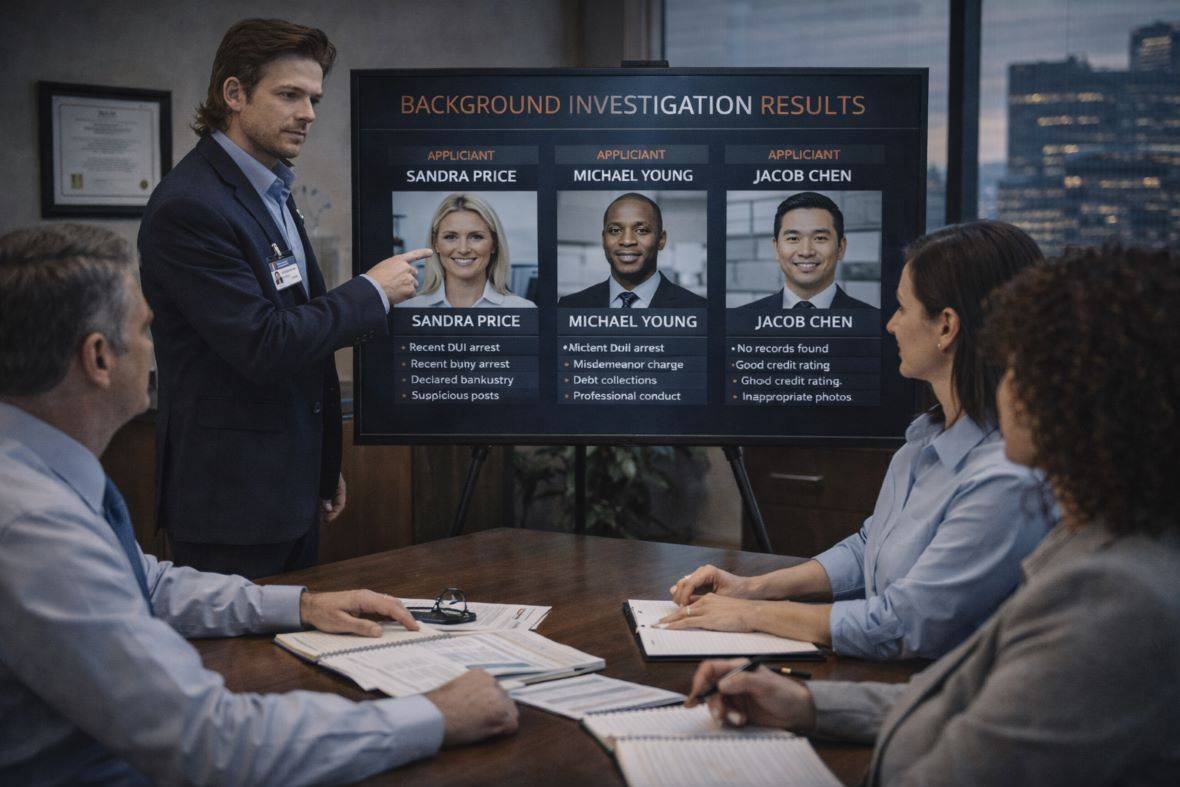
- Background checks using lawful sources, including open records and verified databases, are permitted
- Locating witnesses or hard-to-find people through interviews and legitimate inquiries
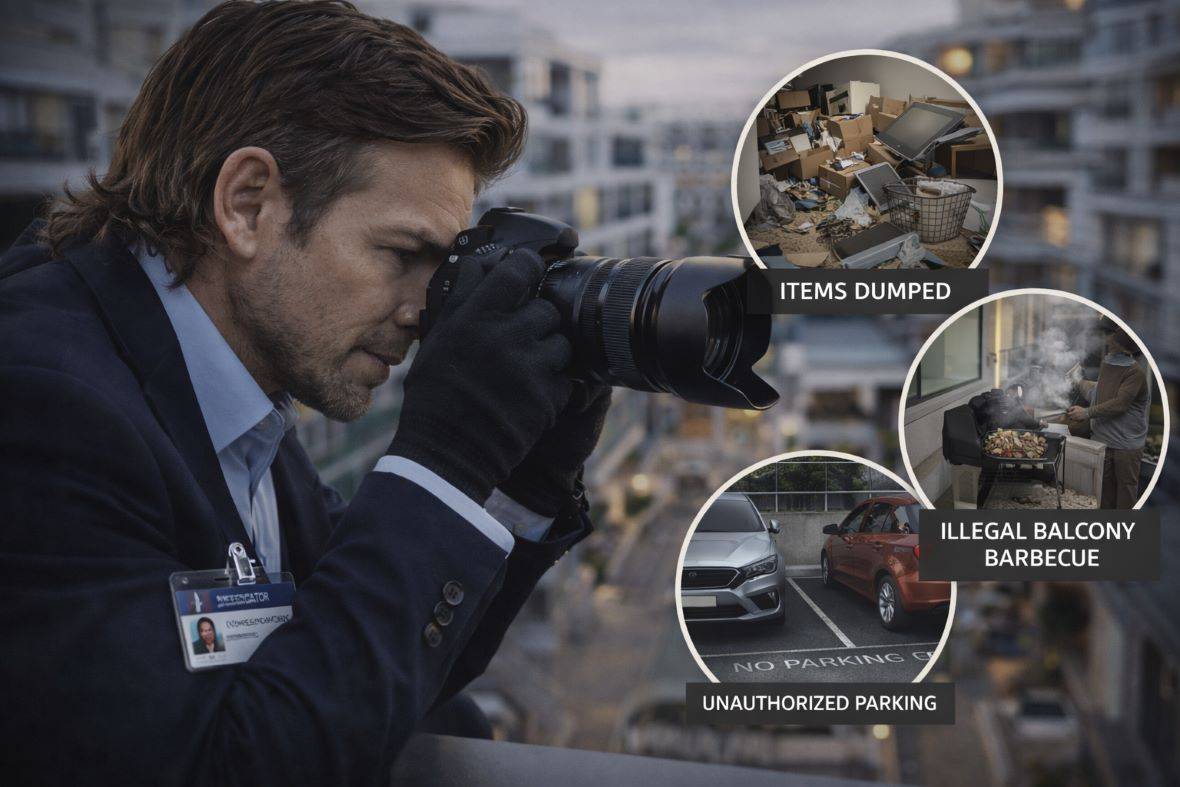
- Discreet observation in public, with clear notes about times, locations, and what was seen
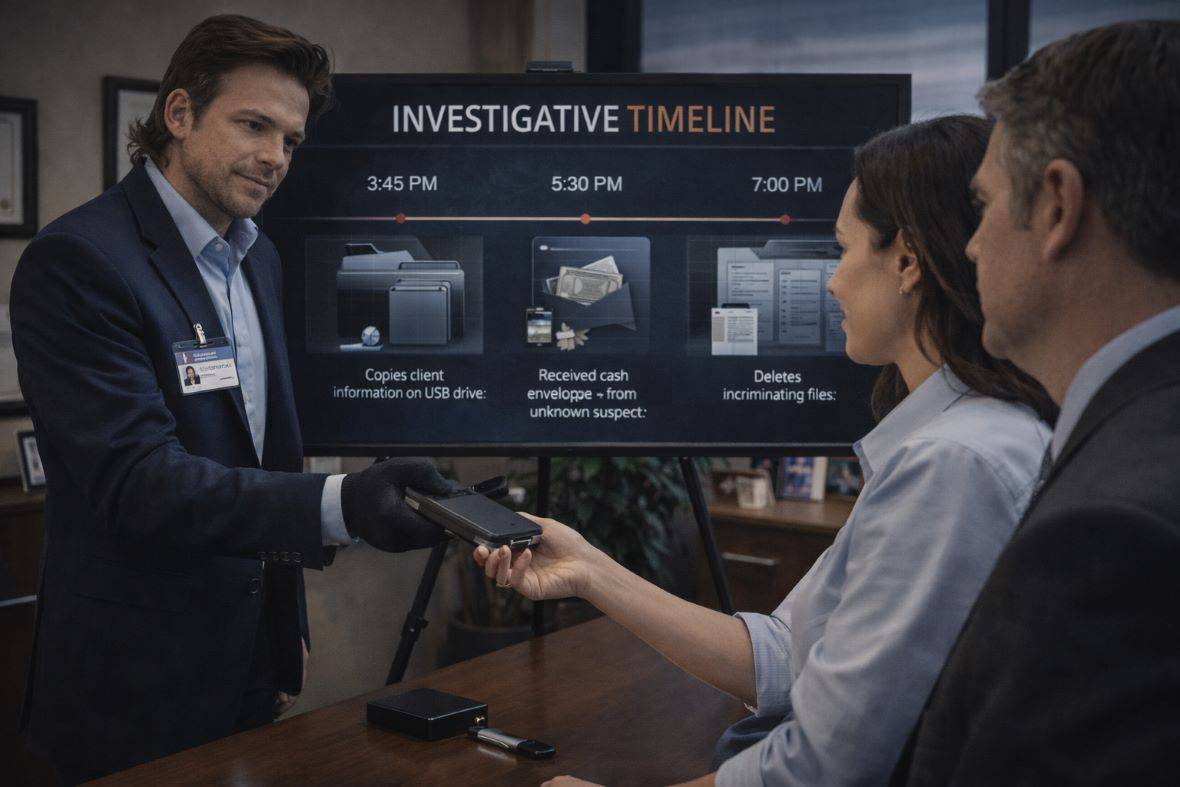
- Evidence collection for family law or workplace matters, documented in a court-ready format
- Process serving (where offered), with proof of service and reporting
Proof you should ask for before you share your story
Before you hand over sensitive details, ask for:
- License details (including the number) and where it’s valid
- Insurance cover
- A written scope of what they will and won’t do
- Fees in writing (hourly rates, expenses, reporting costs)
- Data handling basics (storage, access, retention)
- Who will work the case, not just who takes the call
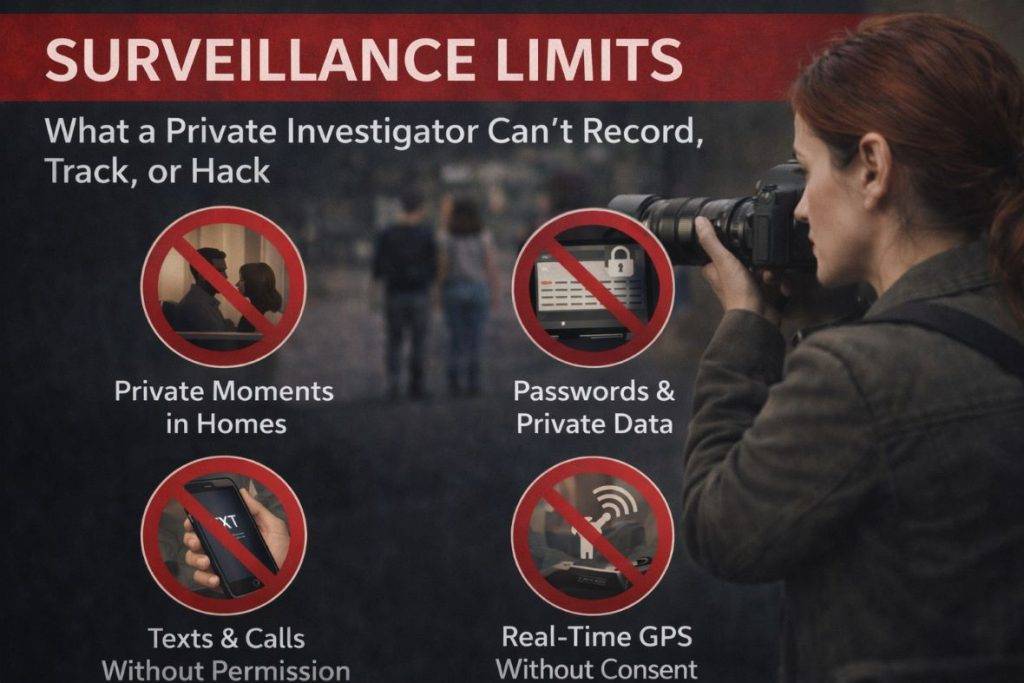
Surveillance limits, what a Private Investigator can’t record, track, or hack
Surveillance is where people most often expect “spy movie” results. In real life, limits are tight. A PI may follow someone in public and record what’s visible from lawful vantage points. They generally can’t trespass, intimidate, or create a situation that appears to be stalking.
Recording is also tricky. Hidden listening devices, intercepting calls, and recording private conversations without consent can be illegal, depending on where you are and how it’s done. GPS trackers and drones can also cross the line fast if they’re used without authority or in places where privacy is expected.
If evidence is gathered illegally, it can blow up your case. It may be rejected in court, and you could face trouble too if you push for unlawful tactics.
Public places vs private spaces: What counts as trespass
A public footpath is one thing. Private property is another. Apartment corridors, gated communities, and “staff only” areas can be grey zones. A good rule is this: if a person would reasonably expect privacy there, filming or watching from up close can be risky. Stakeouts should stay discreet, calm, and non-threatening.
Phones, emails, social media, and why “just check their messages” is risky
Accessing someone’s phone, email, or private social accounts without permission is a common request, and it’s a common legal trap. A PI can review public posts and lawful records, but they can’t crack passwords, clone devices, or install spyware. Even a shared device can be complicated, so your investigator should guide you before you touch anything.
Privacy and fairness: how your information should be handled
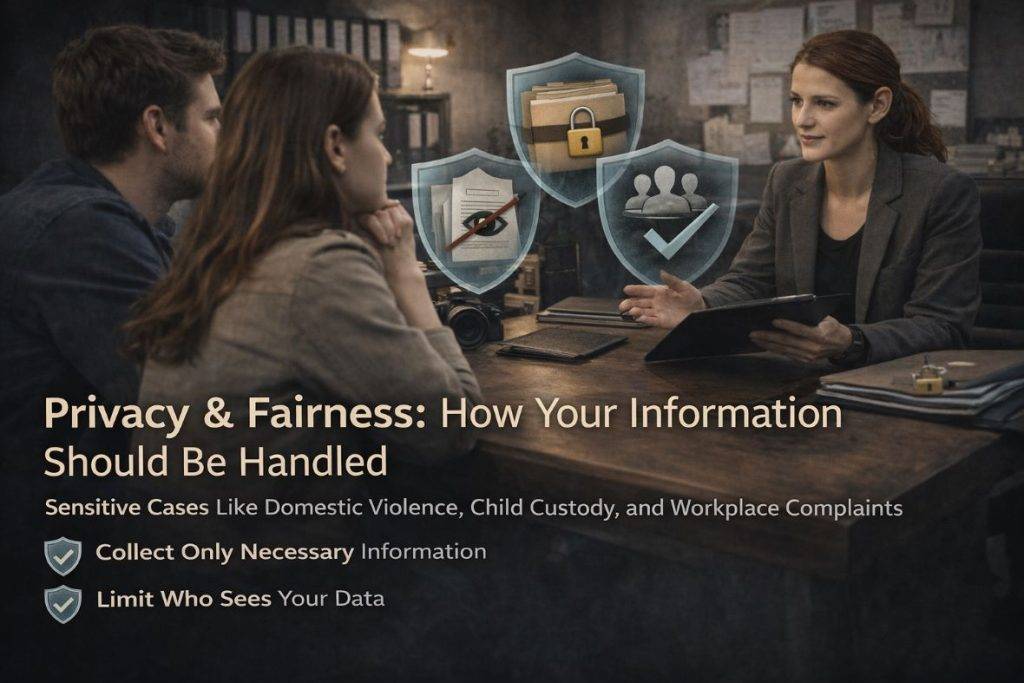
A professional Private Investigator Melbourne should collect only what’s needed, store it securely, and limit who sees it. You should be told what will go into the report, how it will be shared, and what happens after the job is done.
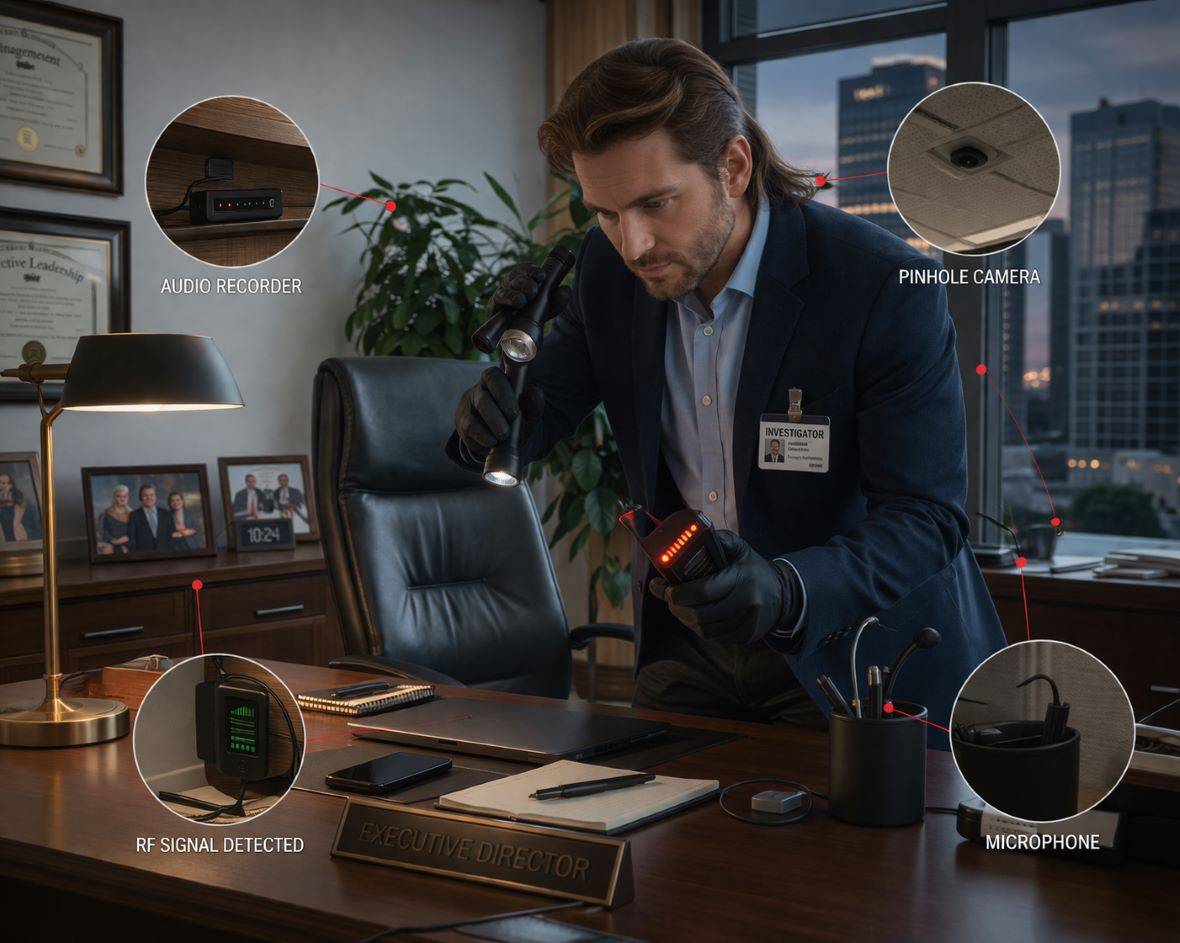
This matters most in sensitive cases, like domestic violence, child custody, or workplace complaints. If you suspect you’re being watched or tracked, consider professional counter-surveillance services to identify risks without escalating the situation.
When an investigator must pause, report, or refuse the job
Expect a PI to refuse requests to:
- Threaten or harass someone
- Break into property or vehicles
- Plant tracking or listening devices unlawfully
- Pretend to be a police officer or a government official
- Contact a protected person when an AVO or court order applies
Conclusion
The limits of private investigations in Australia are simple in spirit: a strong Private Investigator finds facts without breaking laws, crossing privacy lines, or putting you at risk. When you call, use three prompts: What’s your license and where is it valid? What methods will you use? And can you give me a written plan with clear boundaries? The right answer should sound calm, specific, and firm.
FAQ
Can a Private Investigator follow someone in Australia?
Yes, in many situations, it’s done discreetly and lawfully in public. Following becomes a problem if it turns into harassment, trespass, or behaviour that looks like stalking.
Can a PI access phone records or read your texts?
Not without proper permission and a lawful path. Public information is one thing; breaking into accounts or devices is another.
Will illegally obtained evidence help in court?
It can backfire. Courts may reject it, and you may expose yourself to complaints or charges if you encourage unlawful actions.

Written by the Triumph Australia investigations team. We work for insurers, claims managers, employers and law firms on surveillance, fraud and due diligence matters Australia-wide.
GORA Investigations Pty Ltd, NSW Master Licence 412080174.