Last updated:
While the technology is accessible, the legal landscape is far more complex and restrictive. Placing a tracking device on a vehicle without permission isn’t just a moral grey area; it’s often a direct violation of the law. You might think you’re just getting answers, but you could actually be stepping into a legal minefield. When people find themselves in these murky waters, they often turn to professional Private Investigation Services to understand what’s permitted. A professional investigator doesn’t just chase leads; they operate within a strict legal framework to ensure that any information gathered is both ethical and useful.
Imagine driving home on a quiet Tuesday evening, the streetlights casting long, flickering shadows across the pavement. You glance in your rearview mirror and notice the same silver sedan that’s been behind you for three turns. Your heart quickens as a cold shiver runs down your spine. Is someone following you, or is it just a coincidence? In an age where high-tech gadgets are sold for the price of a dinner for two, the fear of being tracked is no longer reserved for spy movies. Small, magnetic GPS units are incredibly easy to find online, making it tempting for a suspicious spouse or a worried business partner to take matters into their own hands.
Understanding the Law on Vehicle Surveillance

The legality of vehicle tracking almost always hinges on two main factors: ownership and consent. In most jurisdictions, the law views a car as a private space. Just as you can’t walk into someone’s house and plant a microphone, you generally cannot attach a tracking device to a car that doesn’t belong to you. Doing so without the driver’s knowledge can lead to serious legal trouble, including charges of stalking, harassment, or invasion of privacy. Laws are designed to protect individuals from unwanted monitoring, and courts take these protections very seriously.
When a person decides to play detective on their own, they rarely consider the fine print of local surveillance legislation. For instance, even if you’re a part-owner of a vehicle, tracking it while your estranged partner is driving could still land you in hot water depending on local domestic violence or privacy statutes. This is why many people seek out legal actions for private investigators in Australia to see how the pros handle these situations. A licensed Private Investigator knows exactly where the line is drawn. They follow specific protocols that ensure their methods don’t cross into criminal behaviour.
Navigating these rules requires more than just a search engine; it requires an understanding of how evidence is viewed by the law. If you track someone illegally, not only do you risk arrest, but any “proof” you find becomes completely useless in a courtroom. It’s known as “fruit of the poisonous tree.” Because the initial act of tracking was illegal, the evidence it produced is tainted and inadmissible. Professional investigators prioritise the integrity of the process so that their clients aren’t left with a pile of evidence they can’t actually use to protect their interests.
When Is It Legal to Track a Car?
There are specific situations where tracking a vehicle is perfectly legal. The most common scenario is when you own the vehicle outright. If the car is in your name, you generally have a right to know where your property is at all times. This is why parents often place trackers on the cars their teenage children drive. It’s a safety tool, not a stalking tool. Another common use is in the business world, where company owners install GPS units in their delivery fleets.
Business owners use these devices to monitor fuel efficiency, ensure drivers stay on their routes, and protect expensive assets from theft. Because the company owns the trucks, and the employees are usually notified of the tracking as part of their employment contract, it falls within legal boundaries. In these cases, the tracker serves as a management tool rather than a surveillance bug. Clear communication and documented ownership are the keys to keeping things legal.
What Happens When You Track Someone Illegally?
The consequences of illegal tracking are swift and severe. If you’re caught placing a device on a car you don’t own, you could face heavy fines or even jail time. Law enforcement agencies view unauthorised tracking as a precursor to more dangerous behaviours like physical stalking or domestic assault. Beyond the criminal charges, you might find yourself on the receiving end of a civil lawsuit for emotional distress or invasion of privacy.
Using strong, decisive action, the legal system protects the “reasonable expectation of privacy” that every driver has. If you suspect an employee is stealing or a partner is being untruthful, the urge to “catch them in the act” is strong. But if you act outside the law, you become the one the police are interested in. Illegal surveillance can ruin your reputation and your bank account. It’s far better to rely on professional surveillance investigation services that use approved, lawful techniques to get the job done right.
Finding Peace of Mind if You Suspect Tracking
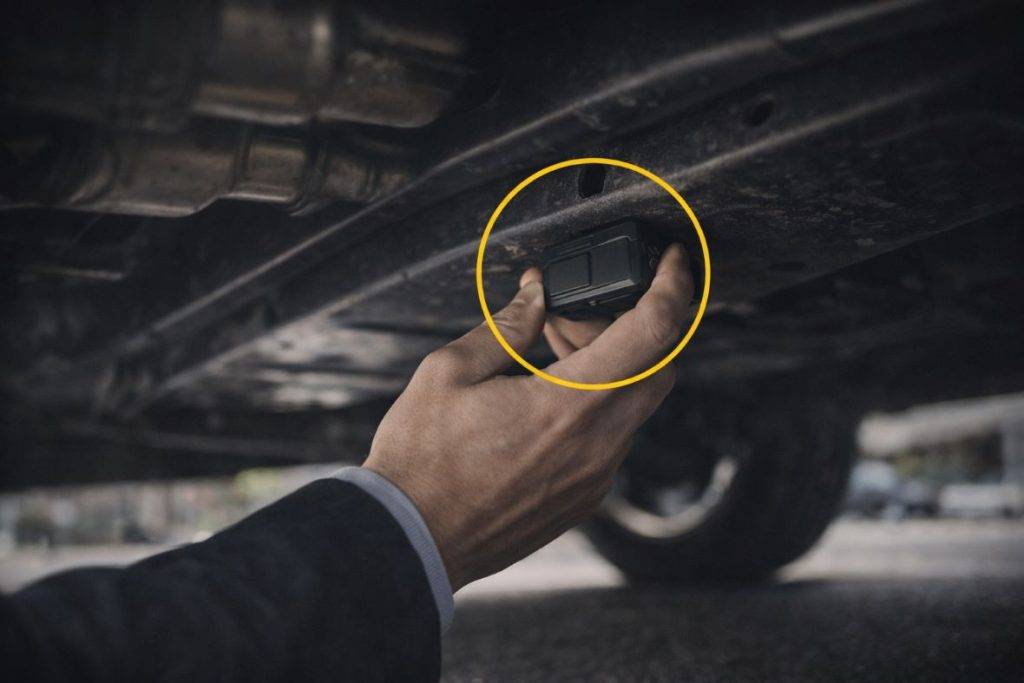
If you have a nagging feeling that someone is watching your movements, don’t ignore your gut. Finding a hidden tracker requires a bit of detective work. Most devices are magnetic and tucked away in places like the wheel wells, behind the bumpers, or even deep inside the undercarriage. You can start by doing a physical sweep with a bright flashlight, looking for small black boxes that don’t belong there. However, modern trackers can be as small as a coin, making them nearly impossible for an untrained eye to spot.
When a physical search yields nothing but the feeling persists, it’s time to call in a specialist. A professional Private Investigator has the equipment and the experience to perform a “bug sweep” of your vehicle. They use electronic scanners that pick up the signals these devices emit when they transmit data back to the person watching. This isn’t just about finding the hardware; it’s about regaining your sense of security and knowing that your private life stays private.
Once a device is found, the most important step is to remain calm and contact the authorities. Do not remove the device yourself immediately if you want to preserve fingerprints or forensic evidence. The police can often trace the tracker’s serial number back to the person who purchased it. Combining the expertise of Private Investigation Services with law enforcement is the most effective way to handle a stalker or an overzealous individual who has crossed the line. Your safety always comes first, and taking logical, legal steps is the only way to resolve the situation permanently.
Protecting Your Privacy the Right Way
Understanding the laws surrounding vehicle tracking is essential for anyone who values their privacy or is considering monitoring someone else. While the technology is simple, the legal consequences are anything but. Attempting to bypass the law usually leads to a loss of credibility and potential criminal charges. If you truly need to gather information about a vehicle’s movements, the only safe path is through a licensed professional who understands the local statutes inside and out.
Respecting boundaries and privacy isn’t just about being a good person; it’s about staying on the right side of the justice system. If you find yourself in a situation where you feel the need to watch someone, or if you feel you are being watched, seek professional help. It’s the only way to ensure that your actions—or your reactions—are legal, effective, and safe.
Frequently Asked Questions
- Is it legal to track my spouse’s car?
In most cases, if you do not own the car or if your spouse has a reasonable expectation of privacy, it is illegal to track them without their consent. Even in a marriage, individuals have privacy rights that the law protects.
- Can I track my own car if someone else is driving it?
Generally, yes. If your name is on the title of the vehicle, you usually have the legal right to install a GPS tracker. This is common for parents of teen drivers or business owners with company cars.
- What should I do if I find a tracker on my car?
Do not touch or move the device, as it may contain fingerprints. Take photos of it and its location, then immediately contact the police to file a report so they can investigate who placed it there.

Written by the Triumph Australia investigations team. We work for insurers, claims managers, employers and law firms on surveillance, fraud and due diligence matters Australia-wide.
GORA Investigations Pty Ltd, NSW Master Licence 412080174.