Last updated:
In Brisbane, stalled matters often have one thing in common: the person you need has gone quiet. A debtor stops answering calls, a witness changes address, a former tenant disappears, or a key contact in a property or finance dispute simply falls off the radar. When that happens, progress slows, costs rise, and a straightforward matter can become unnecessarily difficult.

That is where skip tracing investigation becomes useful. In practical terms, skip tracing is the process of locating a person or business that is difficult to contact, typically to move a legal, financial, or property matter forward. For Queensland businesses and legal teams, that can matter in debt recovery, court preparation, tenancy disputes, service of documents, and factual investigations. QCAT confirms that minor debt applications in Queensland can be made for a fixed or agreed amount of up to $25,000, and that applicants must understand service requirements and procedural obligations as the matter progresses (QCAT). Queensland Courts also notes that witnesses may be legally required to attend court, and that failing to attend after being summoned or subpoenaed can carry serious consequences (Queensland Courts). (QCAT)
Why skip tracing matters in Brisbane before a matter goes stale
Many disputes do not collapse because the underlying case is weak. They stall because a person cannot be located quickly enough to be contacted, served, interviewed, or brought back into the process. In Brisbane, that can affect law firms, lenders, insurers, property managers, landlords, body corporates, and businesses trying to recover unpaid money.
This is especially relevant to debt matters in Queensland. QCAT states that a minor debt claim must involve a previous agreement regarding the payment of money, be for no more than $25,000 (excluding interest), and relate to an agreement made no more than six years ago. It also stresses that the applicant must serve the application correctly and that a matter can proceed in a party’s absence if required responses are not made within the proper timeframes (QCAT). In other words, it is not enough to know you are owed money. You also need to know where the other party is and how to properly move the matter forward. (QCAT)
That is why skip tracing has real commercial value. It helps convert a dead end into a workable next step.
What skip tracing actually does
Skip tracing is often misunderstood as a vague or aggressive debt collection tactic. In reality, it is a location-verification process. The aim is to identify current contact points, confirm that a person or business is where they are supposed to be, and gather sufficient reliable information to support the next lawful step.
On Triumph Australia’s own service page, debt recovery and skip tracing are framed as tools for locating debtors, missing persons, witnesses, or beneficiaries when messages are ignored, contact details are disconnected, and ordinary searches have reached a dead end. The same page positions skip tracing as useful for recovering debt efficiently and helping businesses avoid prolonged cash flow strain (Triumph Australia).
For a Brisbane matter, that might mean locating:
- a debtor who no longer responds to calls or emails
- a witness whose old address is no longer valid
- a former tenant in a property-related dispute
- a guarantor or director connected to an unpaid account
- a beneficiary or related party needed for estate or civil enquiries
The purpose is not intrusion for its own sake. The purpose is progress.
How skip tracing helps legal matters
Legal matters often depend on timing, service, and people being contactable. If a witness or party cannot be found, the case may not advance as efficiently as it should. Queensland Courts states that a witness may be asked to attend court if they have information that can help the court come to a fair decision, and that a summons or subpoena can compel attendance in the appropriate court (Queensland Courts; Queensland Government).
That makes witness tracing especially important in matters where:
- a person saw or heard something relevant
- a former employee or contractor holds key factual information
- someone needs to produce documents or evidence
- a civil or criminal process depends on attendance or service
When a witness cannot be contacted at an old address, the issue is not just inconvenience. It can affect preparation, procedural fairness, and case momentum. Skip tracing helps legal teams verify whether the person has relocated, changed work details, or remains traceable through lawful information sources and field enquiries.
How skip tracing helps finance and debt recovery matters
In finance matters, delay is expensive. Every week spent chasing outdated contact details is time not spent resolving the actual debt. QCAT’s debt dispute process makes clear that minor debt claims are designed to provide a pathway for recovering fixed or agreed amounts, but service and procedural compliance still matter (QCAT). At the same time, the ACCC and ASIC’s debt collection guideline makes it clear that debt collection activity must remain consistent with consumer protection laws and with the rights and obligations of both creditors and debtors (ACCC; ASIC).
That is why professional skip tracing is useful before a matter becomes messy. It helps businesses and advisers:
- confirm whether a debtor is still at a known address
- identify updated contact pathways
- verify whether a business is still operating
- support a lawful debt recovery strategy rather than repeated guesswork
- reduce wasted staff time chasing leads that no longer exist
For Brisbane businesses, this is particularly relevant where outstanding accounts disrupt cash flow. Triumph’s service content explicitly frames debt recovery as a means to improve cash flow management, reduce arrears, and free staff to focus on their core work rather than spending time chasing overdue payments (Triumph Australia).
How skip tracing helps property matters
Property disputes often look simple from the outside, but they can become difficult quickly when someone disappears. In Brisbane, property-related tracing work may arise in residential tenancy disputes, bond-related disagreements, abandoned obligations, unpaid rent issues, or ownership and asset-risk checks.
QCAT states that it can assist with residential tenancy disputes involving tenants, landlords, lessors, agents, and rooming accommodation parties (QCAT). That matters because tenancy and occupancy disputes often depend on knowing where the other party is, whether they can be contacted, and how the matter should proceed.
Property matters can also overlap with asset and finance checks. The PPSR describes itself as the official government noticeboard for security interests in personal property and explains that a search can indicate whether goods or company assets are likely to be free of debt or other risks. It also notes that registering on the PPSR lets the public know if personal property, such as goods, vehicles, or company assets, has a security interest over it (PPSR).
For practical purposes, that means a Brisbane property, finance, or recovery matter may involve two related questions:
- Where is the person you need?
- What risks are attached to the assets or obligations connected to them?
Skip tracing helps with the first question. Register and records checks can help with the second.
What information makes a trace more effective
Not every trace begins with a complete file. Often, the strongest cases begin with very little. Even so, some details make the process more efficient, including:
- full name and date of birth, where available
- last known address
- phone numbers and email addresses
- ABN, ACN, employer, or trading name
- previous tenancy or employment details
- vehicle, company, or asset information relevant to the matter
- copies of agreements, invoices, or correspondence
What matters most is accuracy. A clean starting point saves time and reduces false leads. In many cases, skip tracing works best when paired with other services such as [Factual Investigations], [Background Checks], or [Online Profiling], especially when the matter involves both location work and broader risk verification.
Why lawful process matters just as much as speed
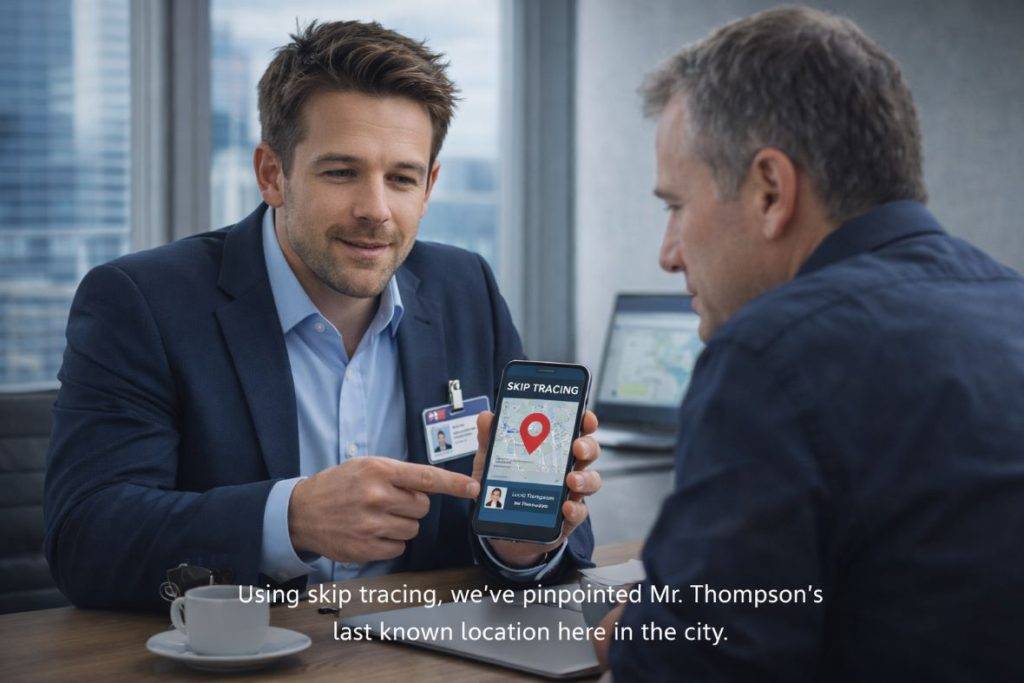
It is tempting to think skip tracing is only about speed, but the lawful method matters just as much. The ACCC and ASIC debt collection guidelines exist precisely because collection activity must respect legal boundaries and consumer protection obligations (ACCC; ASIC). Similarly, court-related steps such as subpoenas and service rules only help if they are handled correctly within the proper process (QCAT; Queensland Government).
That is one reason businesses, lawyers, and property professionals often use a licensed private investigator service in Australia rather than relying on ad hoc searches. A professional approach is not just about finding someone. It is about finding them in a way that supports the next step, whether that is service, negotiation, recovery, witness preparation, or a factual report.
Why this matters in Brisbane right now
Queensland’s current indicative timeframes also show why delay has real consequences. Recent QCAT figures indicate that minor debt disputes, residential tenancy disputes, and other civil matters can take a meaningful time to finalise, with some matters taking longer depending on complexity and circumstances. If a person cannot be located early, that lost time can compound into a much longer and more expensive process.
For Brisbane businesses, landlords, legal advisers, and finance teams, skip tracing is therefore not just a reactive last resort. Used properly, it is a practical tool for restoring momentum where a missing debtor, witness, or former occupant is the real reason a matter has stopped moving.
Conclusion
A matter does not always stall because the law is unclear or the facts are weak. Sometimes it stalls because the person you need is no longer easy to find. In Brisbane, this can affect debt recovery, witness preparation, tenancy disputes, and a wide range of finance and property matters.
That is why skip tracing remains valuable. It helps turn missing contact details into action, dead ends into next steps, and delayed matters into workable ones again. If a debtor, witness, former tenant, or related party has gone quiet, the right investigative support can help legal, finance, and property matters move forward again with greater clarity and less wasted time.
FAQs
1. What is skip tracing in a Brisbane legal or debt matter?
Skip tracing is the process of locating a person or business that has become difficult to contact. In Brisbane matters, it is often used to help with debt recovery, locating witnesses, serving documents, or progressing tenancy and property disputes.
2. Can skip tracing help with QCAT debt matters?
Yes. Skip tracing can help identify or verify contact details for a debtor so a matter can move forward more efficiently. QCAT minor debt applications still require correct service and compliance with the process, so locating the right person matters.
3. Is skip tracing only for debt collection?
No. Skip tracing can also help locate witnesses, former tenants, beneficiaries, guarantors, or other people connected to legal, finance, and property matters. Its value is broader than debt collection alone.
References
Australian Competition and Consumer Commission. Guideline on debt collection for collectors and creditors. (ACCC)
Australian Securities and Investments Commission. RG 96 Debt collection guideline: For collectors and creditors. (ASIC)
Personal Property Securities Register. Personal Property Securities Register. (Personal Property Securities Register)
Queensland Civil and Administrative Tribunal. Minor debt disputes. (QCAT)
Queensland Civil and Administrative Tribunal. Residential tenancy disputes. (QCAT)
Queensland Courts. Witnesses. (www.)
Queensland Government. Apply to issue a subpoena. (Queensland Government)
Triumph Australia. Debt Recovery / Skip Tracing. (Triumph Investigations)

Written by the Triumph Australia investigations team. We work for insurers, claims managers, employers and law firms on surveillance, fraud and due diligence matters Australia-wide.
GORA Investigations Pty Ltd, NSW Master Licence 412080174.