Last updated:
When an employee resigns, most Adelaide businesses focus on the obvious transition tasks: final pay, handover, account shutdowns, and replacing lost capacity. The bigger risk often appears later. A shared folder is suddenly empty. A client file cannot be opened. Key emails are missing. A departing staff member’s laptop has been “cleaned up,” but the business cannot tell whether files were simply deleted, moved, copied out, or overwritten. At that point, the problem is no longer just operational. It can become an evidence issue.
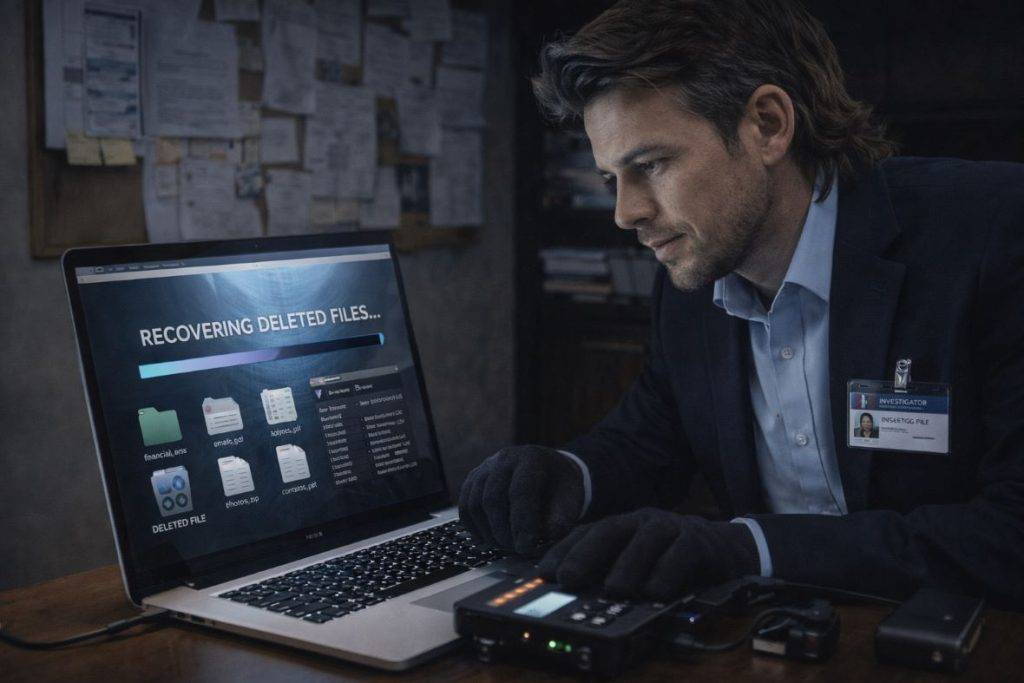
That is where a forensic investigation can help. In practical terms, digital forensics is not only about recovering deleted files. It is about understanding what happened to business data, when it happened, what systems still hold traces of it, and whether the organisation can prove the sequence of events in a way that supports a workplace, civil, or legal response. Australian guidance is consistent on the basics: good visibility through event logging supports effective investigation, secure backups improve recovery, and personal information must be collected and used lawfully and only to the extent reasonably necessary (ASD; OAIC;cyber.gov.au)
Why do deleted files after resignation matter more than many businesses expect
Deleted files are often treated as an IT inconvenience. In reality, they can affect revenue, compliance, dispute resolution, and business continuity. A deleted spreadsheet may hold client billing data. A missing mailbox may contain contract approvals. A removed project folder may be the only place where a decision trail survives. In some cases, the deletion is accidental. In others, it may sit alongside broader concerns such as data theft, client diversion, sabotage, or an attempt to weaken the employer’s position after departure.
This matters in Adelaide just as much as it does in larger east-coast centres. A mid-sized professional practice, wholesaler, consultancy, healthcare provider, or construction business may not have a large internal cyber team, but it can still suffer serious damage if key records are lost at the point of resignation. The Australian Signals Directorate says good visibility of activity on workstations and servers is essential for conducting an effective investigation, and that event logs provide critical insight into the events relating to a cybersecurity incident and its extent (ASD; cyber.gov.au)
That is why the question is rarely just “Can we get the files back?” The more useful questions are:
- What was deleted, moved, or copied?
- On which device or system?
- Is there evidence of removal to personal storage, cloud services, or external media?
- Do backups, logs, or synced systems preserve the missing material?
- Does the business need the data back, proof of what happened, or both?
What a forensic investigation actually does after a resignation
A forensic investigation is different from ordinary IT troubleshooting. Standard support may restore a backup or recover a few deleted items. Forensics goes further. It aims to preserve the evidence trail while assessing what happened across the relevant devices, accounts, systems, and records.
In a post-resignation file-loss matter, that often includes:
- preserving the device or account in its current state
- identifying whether deletion occurred locally, on a server, or in cloud storage
- reviewing logs, sync activity, and account access history
- assessing whether files were copied to external devices or unauthorised locations
- checking whether backups, archives, or version histories still hold recoverable data
- documenting findings in a way that can support internal decision-making or legal advice
This distinction matters because organisations sometimes damage their own evidence by trying to “fix” the issue too quickly. A device is reissued, cloud folders are reorganised, or user accounts are altered before anyone records what they contained. If that happens, the business may restore operations but lose clarity about how the loss occurred.
Deleted does not always mean gone
One of the biggest misconceptions in workplace data disputes is that deletion equals disappearance. Sometimes it does not. Depending on the storage environment, deleted content may still exist in recycle or recovery areas, email retention systems, synced cloud folders, server snapshots, version history, or formal backups. ASD’s small-business backup guidance says that implementing regular backups helps an organisation recover and maintain operations if it loses access to files, and that restoring from secure backups enables recovery sooner (ASD). (www.)
That does not mean recovery is guaranteed. The longer the delay, the more likely the data will be overwritten, rotated out of retention windows, or complicated by continued system use. But from an evidence perspective, deleted material often leaves traces even where the original file is not fully recoverable. Log entries, sync records, access events, attachment history, backup timestamps, and external-device artefacts can still help explain what happened.
Why logs matter as much as backups
Backups help recover files. Logs help explain conduct.
That distinction is critical in a resignation dispute. If the employer only needs the missing document back, a backup may be enough. If the business needs to know whether the departing employee deliberately deleted data, copied it elsewhere, or accessed systems outside expectations, logging becomes central. ASD’s cyber guidance states that one of the core elements of detecting and investigating cybersecurity incidents is the availability of appropriate data sources, such as event logs, and that cybersecurity personnel need access to sufficient data sources and tools so systems can be monitored for key indicators of compromise (ASD).
ASD also recommends retaining event logs and protecting backups from unauthorised modification or deletion through appropriate access controls during their retention period (ASD).
In practical terms, a forensic investigator may use logs to identify:
- when deletion or bulk movement occurred
- whether a user accessed systems outside normal patterns
- whether external storage, unusual logins, or remote access were involved
- whether data was uploaded to cloud services or emailed externally
- whether other accounts or systems were touched around the same time
For Adelaide businesses, this often makes the difference between suspicion and proof.
What employers should do first when they discover deleted files
The first response after discovering missing files matters. A rushed or careless response can make recovery harder and compromise the evidence trail.
A safer sequence is usually:
1. Preserve the device or account
Do not keep using the device as normal if the matter may become contentious. Continued use can overwrite recoverable data and distort timestamps or system history.
2. Lock down access carefully
Disable or suspend access where appropriate, but record what was done and when. Sudden changes without documentation can make later reconstruction harder.
3. Check backups and version history
If the immediate issue is business continuity, this may restore operations quickly. At the same time, avoid altering original evidence unnecessarily.
4. Preserve logs and audit trails
If your systems generate access logs, sync history, email traces, or cloud audit records, secure them early. ASD’s guidance is clear that these data sources are crucial for effective investigation.
5. Get legal or forensic advice before overreaching
The temptation to check personal devices, personal email, or private cloud accounts can create a second problem. A forensic response should stay tied to lawful access, business systems, and reasonably necessary collection.
What can be collected lawfully, and what should be handled carefully
The privacy side of a forensic investigation matters just as much as the technical side. OAIC states that organisations must collect personal information only in a lawful and fair way, and that APP entities may collect only the personal information reasonably necessary for one or more of their functions or activities. OAIC also says personal information should generally only be used or disclosed for the purpose for which it was collected, unless an exception applies, and that only the minimum amount of personal information sufficient for the secondary purpose should be used or disclosed.
This creates a practical rule for Adelaide employers: focus on business systems, business devices, business records, and collection that is proportionate to the issue. Do not turn a legitimate forensic inquiry into a fishing expedition. If the concern is deletion of client files on a company laptop, the collection should be directed to that issue, not to every corner of the former employee’s private life.
There is also an important Fair Work nuance. Fair Work says personal information held by an employer relating to a person’s current or former employment is not covered by the Australian Privacy Principles, but only when used by the employer directly in relation to that employment. Even so, Fair Work still recommends employers be clear about what information they collect, why they collect it, and how it is handled..
The safest approach is still restraint, relevance, and documentation.
When deleted files become a workplace investigation issue
Not every resignation-related data loss is a cyber matter in the technical sense. Sometimes it is a workplace investigation issue. If files disappear alongside evidence of poor handover, breach of policy, client diversion, misconduct, or misuse of systems, the business may need a structured internal investigation rather than a purely technical recovery exercise.
Fair Work’s own investigation guidance notes that workplace investigations can involve collecting evidence such as time and wage records, employment contracts, and other documents depending on the issue being investigated (Fair Work Ombudsman). That may sound broad, but the principle is useful: when a resignation dispute turns into an evidence issue, documentary proof matters.
A forensic investigation can support that process by providing a clearer chronology. Instead of saying “files were missing after the resignation,” the employer may be able to say:
- the files were accessed on a specific date and time
- large deletion or movement activity occurred shortly before departure
- external media or unusual sync behaviour was detected
- backups preserved earlier versions
- relevant records were recoverable and documented
That level of clarity is far more useful for management action, legal advice, or negotiated resolution.
Why evidence handling matters in South Australia
If a business anticipates a dispute, the quality of evidence becomes important. South Australia’s Evidence Act 1929 includes provisions on the admission of business records and electronic communications as evidence, which is one reason organisations should keep records in an orderly and credible form rather than relying on screenshots and memory after the fact.
For a business in Adelaide, that means preserving:
- original or near-original records where possible
- system-generated logs
- backup restoration history
- device and account chain-of-custody notes
- written records of who accessed what and when
- contemporaneous notes of the discovery and response process
The goal is not to over-lawyer every internal issue. It is to avoid losing credibility if the matter later needs to be defended or proved.
What a forensic investigation can often recover
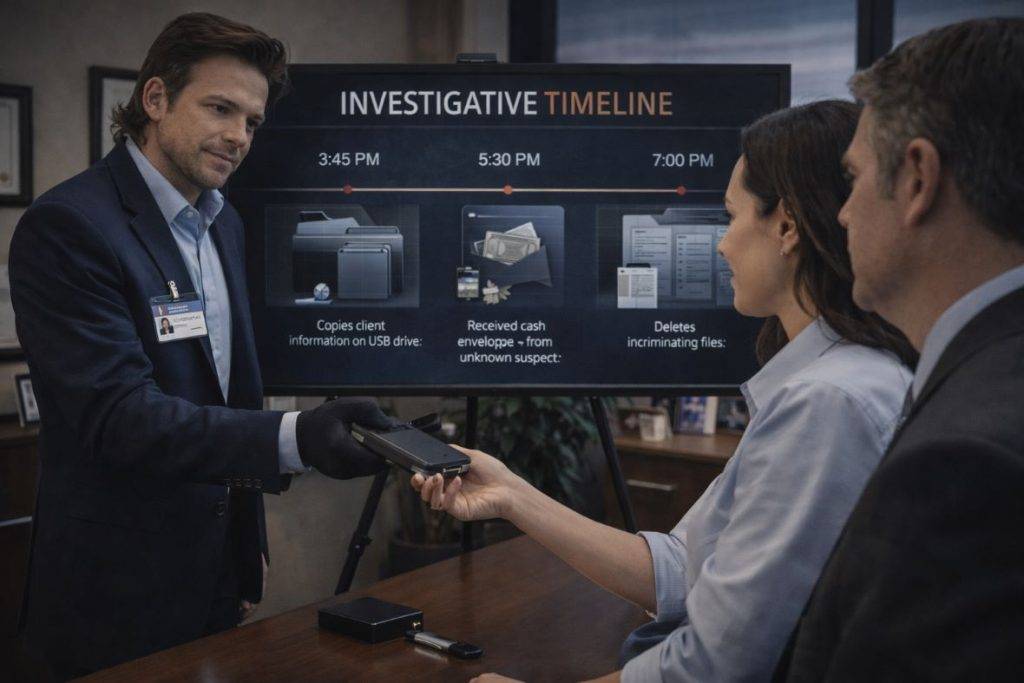
The answer depends on the systems involved, but common recovery and evidence sources include:
- deleted files still present in recoverable storage space
- email archives, mailbox retention, or server copies
- cloud version history and sync metadata
- file-server shadow copies or snapshots
- external drive connection history
- USB or removable-media artefacts
- browser or application traces showing uploads or transfers
- account logs showing access, deletion, or remote activity
Just as importantly, a forensic review can sometimes show that a deletion did not happen at all in the way first assumed. What looks like malicious deletion may turn out to be sync error, poor folder permissions, migration mistakes, or backup failure. That is another reason to start with evidence rather than assumption.
Why this matters for Adelaide employers
This topic supports the real search intent behind forensic investigations. Businesses are rarely searching because they want a generic explanation of deleted files. They are searching because something important is missing and they need to know what can still be recovered, what can still be proved, and what they can lawfully do next.
For Adelaide employers, the combination of resignation, deleted files, and disputed access is especially risky because it sits at the intersection of operations, privacy, workplace management, and evidence. A good forensic investigation helps bring those threads together without guessing, overreaching, or destroying the very evidence the business needs.
Conclusion
Deleted files after resignation are not always just an IT cleanup problem. Sometimes they are the first visible sign of a deeper business-evidence issue. In Adelaide, the businesses that respond best are usually the ones that pause, preserve, and investigate properly. They do not rely on panic, blame, or improvised device checks. Instead, they secure the systems, preserve the logs, review the backups, and collect only what is relevant and lawful.
In such situations, engaging a private investigator in Australia can be beneficial. A skilled investigator can assist in uncovering the truth behind the deleted files, ensuring that any inquiry is thorough and legally compliant. This approach protects the organisation from potential risks and helps maintain integrity during sensitive investigations. That approach does more than recover missing files. It helps restore confidence in what happened, what can be proved, and what steps the business can take next.
FAQs
1. Can deleted business files still be recovered after an employee resigns?
Often, yes. Deleted files may still be recoverable from backups, cloud version history, snapshots, archives, or forensic traces on the device. Even if the full file cannot be restored, logs and system artefacts may still show what happened (ASD). (cyber.gov.au)
2. Should an employer just open the former employee’s accounts and search everything?
Not blindly. The safer approach is to focus on lawful access to business systems and to collect only what is reasonably necessary for the business issue at hand. OAIC says personal information should be collected lawfully and fairly, and only to the extent reasonably necessary for the organisation’s functions or activities (oaic.gov.au)
3. What is the most important first step after discovering deleted files?
Preserve the environment before it changes further. That usually means limiting further use of the device or account, protecting logs and backups, and documenting what was discovered and when. Continued use can overwrite data and make reconstruction harder (ASD). (cyber.gov.au)
References
Australian Signals Directorate. Best practices for event logging and threat detection. https://www.cyber.gov.au/business-government/detecting-responding-to-threats/event-logging/best-practices-for-event-logging-and-threat-detection
Australian Signals Directorate. Guidelines for cyber security incidents. https://www.cyber.gov.au/business-government/asds-cyber-security-frameworks/ism/cyber-security-guidelines/guidelines-for-cyber-security-incidents
Australian Signals Directorate. Guidelines for system management. https://www.cyber.gov.au/business-government/asds-cyber-security-frameworks/ism/cyber-security-guidelines/guidelines-for-system-management
Australian Signals Directorate. Technical example: Regular backups. https://www.cyber.gov.au/business-government/small-business-cyber-security/small-business-hub/small-business-cloud-security-guides/technical-example-regular-backups
Fair Work Ombudsman. Workplace investigations. https://www.fairwork.gov.au/about-us/compliance-and-enforcement/workplace-investigations
Fair Work Ombudsman. Workplace privacy best practice guide. https://www.fairwork.gov.au/tools-and-resources/best-practice-guides/workplace-privacy
Office of the Australian Information Commissioner. Chapter 3: APP 3 Collection of solicited personal information. https://www.oaic.gov.au/privacy/australian-privacy-principles/australian-privacy-principles-guidelines/chapter-3-app-3-collection-of-solicited-personal-information
Office of the Australian Information Commissioner. Chapter 6: APP 6 Use or disclosure of personal information. https://www.oaic.gov.au/privacy/australian-privacy-principles/australian-privacy-principles-guidelines/chapter-6-app-6-use-or-disclosure-of-personal-information
Office of the Australian Information Commissioner. Collection of personal information. https://www.oaic.gov.au/privacy/your-privacy-rights/your-personal-information/collection-of-personal-information
Office of the Australian Information Commissioner. Guide to securing personal information. https://www.oaic.gov.au/privacy/privacy-guidance-for-organisations-and-government-agencies/handling-personal-information/guide-to-securing-personal-information
South Australia. Evidence Act 1929. https://www.legislation.sa.gov.au/__legislation/lz/c/a/evidence%20act%201929/current/1929.1907.auth.pdf

Written by the Triumph Australia investigations team. We work for insurers, claims managers, employers and law firms on surveillance, fraud and due diligence matters Australia-wide.
GORA Investigations Pty Ltd, NSW Master Licence 412080174.