Perth Retail Stock Loss Investigations: How Private Investigators Uncover Internal Theft, CashSkimming and Supplier Leakage
Retail stock loss in Perth rarely starts with one dramatic event. More often, it shows up as a pattern that never quite balances: fast-moving items repeatedly short, refunds that feel harder to explain, supplier deliveries that seem light, or cash that should be in the till but is not. The difficulty is that shrinkage is not one single problem. It can come from customer theft, employee theft, vendor fraud, and clerical error, which is why businesses can lose money for months before they clearly identify the source of the loss.
That is where a structured stock loss investigation becomes useful. For Perth retailers, the real value is not just finding out that stock is missing. It is identifying whether the loss is due to internal theft, cash skimming, supplier leakage, or a process failure, and then documenting the facts in a way that supports management action, recovery efforts, or legal advice. A lawful investigation matters just as much as a thorough one, because workplace monitoring and surveillance must still comply with privacy and state surveillance laws.
Why retail stock loss is often misread
One of the most expensive mistakes in a retail loss matter is assuming the cause too early. A store may blame shoplifting when the bigger issue sits in refund abuse, receiving discrepancies, or stock adjustments. A manager may suspect one staff member when the real pattern sits in how deliveries are checked, how supplier credits are processed, or how cash discrepancies are being explained away. Retail crime and loss have long been recognised as broader than customer theft alone, and that wider view is what makes a proper investigation valuable.
A private investigator helps by separating the categories of loss before the business acts on the wrong theory. If the store does not know whether the problem is internal theft, till manipulation, supplier-side leakage, or administrative error, it cannot fix the right weakness. The first task is usually to identify the mechanism of loss, not just the fact that loss exists.
What internal theft looks like in a retail environment

Internal theft does not always mean someone walking out the back door with stock under their arm. In many Perth retail matters, it appears through smaller operational behaviours that are easier to hide inside normal store activity. That can include unauthorised discounts, false refunds, stock write-offs, voided sales, gift card misuse, sweethearting for friends, manipulating inventory counts, or moving goods out through receiving, returns, or waste channels. Retail crime guidance has long recognised employee theft and fraud as core parts of the retail loss picture.
In practice, an investigator usually looks for patterns such as repeated discrepancies tied to certain shifts, unusual stock adjustments on high-value lines, mismatch between transaction records and camera coverage, or access to storerooms and loading points outside normal expectations. These are the kinds of indicators that turn a vague suspicion into something testable. The key is pattern, because repeated conduct is usually far more informative than one isolated anomaly.
How cash skimming is usually uncovered
Cash skimming is one of the hardest retail losses to detect early because it often sits below the threshold of a daily alarm. It may not involve one large theft. Instead, it can look like repeated small shortages, excessive no-sale entries, unusual till corrections, refund reversals, or balancing explanations that become normalised over time. Small losses that seem individually harmless can add up to a significant drain on the business if nobody tests the pattern properly.
A private investigator will usually compare till-balancing records, point-of-sale exception reports, refund and void activity, roster overlays, and any supervisor override patterns to determine whether the shortfalls are random or linked to a person, terminal, or time window. This is also where staff intelligence matters. Fraud research consistently shows that tips are the most common way occupational fraud is detected, with 43% of cases uncovered through a tip. In a retail setting, that matters because co-workers often notice refund habits, no-sale behaviour, or till handling that management never sees in real time.
What supplier leakage really means
Supplier leakage is often treated as a vague concept, but in practice, it usually refers to losses linked to receiving, invoicing, credits, quantity discrepancies, substitutions, or supplier-side manipulation. Research on stock shortages has specifically recognised vendor fraud and vendor error as contributors to shrinkage, which is important because not every missing item disappears on the shop floor. Some losses begin before the goods are even properly entered into store control.
In real retail investigations, supplier leakage may appear as repeated under-delivery against invoices, duplicated credits, unexplained substitutions, false invoice details, or collusion between an internal employee and an outside supplier. It can also overlap with invoice and payment scams. Australian scam guidance warns that fake invoices can look legitimate because scammers can copy logos and ABNs, and impersonation scams can involve changing banking details on invoices from businesses you already deal with. For a Perth retailer, that means “supplier leakage” can sometimes be an internal control issue, and sometimes a fraud issue hidden inside ordinary accounts processes.
How private investigators work out where the loss is happening
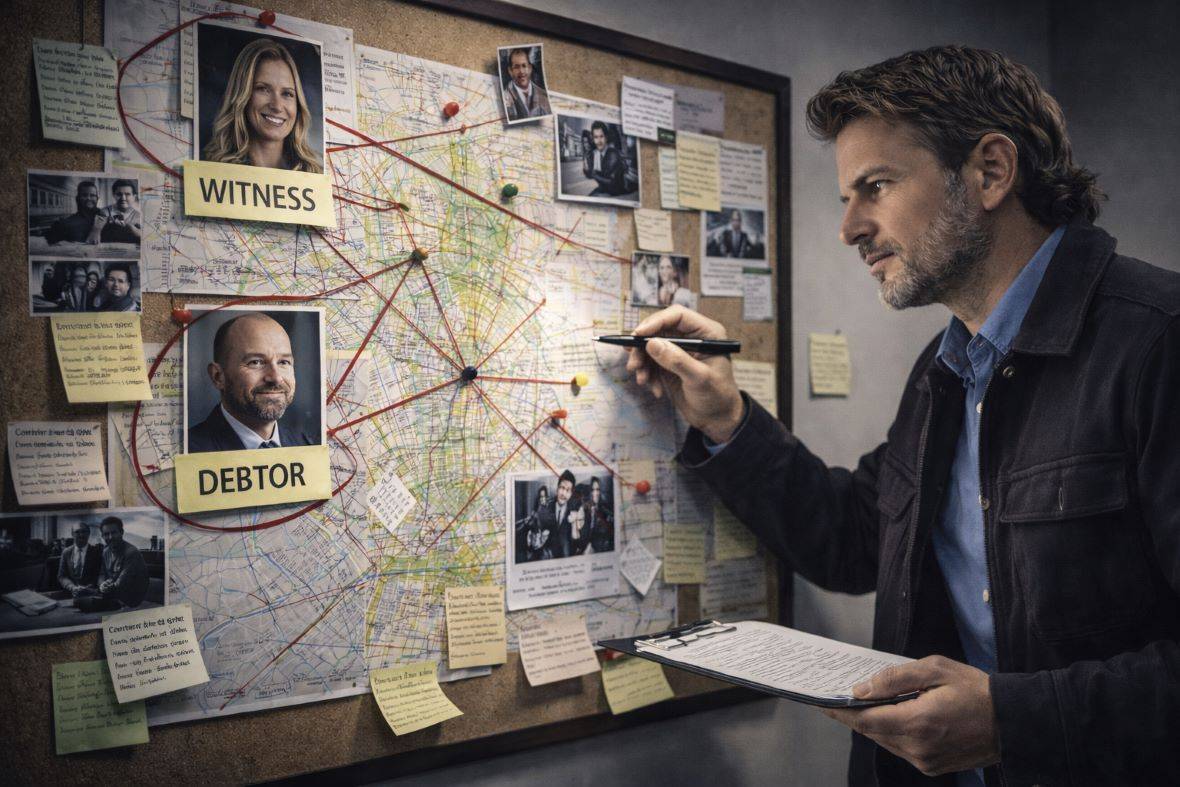
A strong retail stock loss investigation usually starts by rebuilding the path of the stock or cash from entry to sale, adjustment, refund, transfer, or disposal. In a Perth store, this commonly involves stocktake history, cycle count anomalies, point-of-sale exception reporting, delivery logs, supplier invoice matching, roster patterns, and camera review in lawfully monitored areas. The purpose is not to gather “more data” for its own sake. It is to narrow the loss to a workable explanation that the business can act on.
That is where a private investigator often adds the most value. Many retailers already have some of the records, but not the time, independence, or method to compare them properly. Once the likely source of loss is narrowed to internal theft, skimming, supplier leakage, or process failure, the business can make a more informed decision about discipline, recovery, system redesign, or legal escalation.
What employers can document lawfully in Western Australia
Useful evidence still has to be gathered lawfully. General privacy guidance says employers who conduct surveillance or monitor staff must comply with relevant Australian, state, and territory laws, and that organisations using security cameras generally need to comply with several legal obligations. This is particularly important in Western Australia, where the state surveillance law regulates listening, optical, and tracking devices. In other words, the value of an investigation is not just what it finds, but whether the evidence was collected in a way that does not create a second problem.
For Perth employers, the safer evidence usually includes documented stock discrepancies, transaction records, receiving paperwork, roster-linked patterns, CCTV already lawfully in place, witness accounts, and visible conduct in work areas. Covert audio is far riskier. A good investigation, therefore, tends to rely on the ordinary business records the retailer already controls, then tests those records against what actually happened in the store, storeroom, receiving dock, or cash-handling process.
Why tips and internal reporting still matter
Retailers sometimes focus so heavily on cameras and software that they overlook one of the most effective detection tools they already have: people. Fraud research shows that tip-offs remain the most common method of detection, and that employees are the source of more than half of those reports. In retail, that is particularly relevant because co-workers often notice unusual refund habits, stock access patterns, odd delivery conduct, or repeated end-of-shift discrepancies before the data alone becomes obvious.
That does not mean every allegation is true. It means staff information should be treated as a lead, not as proof. A private investigator can help by testing that lead against actual records, footage, and store processes rather than allowing rumour or personal conflict to drive the outcome. That makes the result more reliable and more defensible if the business later needs to explain how it reached its conclusion.
When stock loss becomes more than a workplace issue
Serious internal theft, supplier collusion, or deliberate falsification can move beyond a workplace problem and into potential criminal territory under Western Australian law. That does not mean every stock discrepancy should be treated as a police matter. It does mean that businesses should preserve evidence properly from the start if the pattern suggests deliberate dishonesty rather than simple error. The greater the loss, the more important it is to maintain clear records, preserve footage, and avoid contaminating the evidence trail through rushed internal handling.
This is another reason evidence-led investigation matters. If the matter later requires legal advice, recovery action, or a referral, a clear chronology supported by records will be far more useful than mere suspicion. Even where the business decides to resolve the matter internally, a disciplined investigation helps separate what can actually be proved from what is only assumed.
Why Perth retailers benefit from an evidence-led approach
Retail stock loss can erode cash flow, confidence, staff morale, and management time long before it is properly quantified. The businesses that handle it best are usually not the ones with the most dramatic reaction. They are the ones that stop guessing and start documenting. Internal theft, cash skimming, and supplier leakage can all create the same headline problem, but they leave different patterns behind. Once those patterns are tested against stock records, point-of-sale data, delivery paperwork, witness accounts, and lawful monitoring, the business is in a much stronger position to act.
For Perth retailers, that means the value of a private investigator is not simply in catching someone. It is in turning an unresolved loss pattern into a clear explanation that the business can respond to with confidence. Sometimes the outcome is disciplinary. Sometimes it is a procedural change. Sometimes it is a stronger supplier verification. In every case, the goal is the same: control the loss before it becomes normalised.
Conclusion

Retail stock loss is rarely solved by instinct alone. In Perth, the most effective response is usually a structured investigation that identifies where the loss is occurring and what conduct or weakness is causing it. Internal theft, cash skimming, and supplier leakage may look similar in the accounts, but they leave different evidence trails. When those trails are examined properly, a retailer can move from frustration to facts, protect cash flow, tighten weak controls, and make decisions based on evidence rather than assumptions.
FAQs
1. What is the difference between retail stock loss and shoplifting?
Retail stock loss is broader than shoplifting. It can include customer theft, employee theft, vendor fraud, and clerical error, meaning a store can suffer serious shrinkage even when external theft is not the primary cause.
2. Can a Perth employer use CCTV in a stock loss investigation?
Often yes, but the employer still needs to comply with relevant privacy and surveillance laws. Lawfully installed workplace cameras and existing records are generally safer than covert audio or intrusive methods that create additional legal risk.
3. What is the first sign of cash skimming or internal theft?
Usually, it is not one large event. It is a repeat pattern, such as unusual refunds, voids, no-sale entries, stock adjustments, till shortages, or losses clustered around specific shifts, operators, or access points. Tips from staff also matter because tip-offs are the most common way occupational fraud is detected.
References
Australian Competition and Consumer Commission. Beware of fake invoices from scammers impersonating businesses. https://www.accc.gov.au/media-release/beware-of-fake-invoices-from-scammers-impersonating-businesses/
Australian Competition and Consumer Commission. Payment redirection scams cost Australian businesses $14 million. https://legacy.acfe.com/report-to-the-nations/2024/
Association of Certified Fraud Examiners. 2024 Report to the Nations.
Association of Certified Fraud Examiners. A sneak peek at the 2024 Report to the Nations.
Association of Certified Fraud Examiners. Building a Best-in-Class Whistleblower Hotline Program.
Australian Institute of Criminology. Understanding and controlling retail theft.
Australian Institute of Criminology. Preventing retail crime.
Australian Institute of Criminology. A review of victimisation, predictors and prevention.
Office of the Australian Information Commissioner. Workplace monitoring and surveillance. https://www.oaic.gov.au/privacy/your-privacy-rights/surveillance-and-monitoring/workplace-monitoring-and-surveillance
Office of the Australian Information Commissioner. Security cameras.
Western Australia. Surveillance Devices Act 1998. https://www.legislation.wa.gov.au/legislation/statutes.nsf/main_mrtitle_946_homepage.html
Western Australia. Criminal Code Act Compilation Act 1913.