In Sydney, deals often move faster than the verification behind them. A proposed partner may look polished, a new director may present strong credentials, and a supplier may appear established enough to pass a quick glance. The real risk is that surface-level credibility can hide deeper issues such as undisclosed insolvency history, mismatched business records, hidden asset encumbrances, or a pattern of failed entities that only becomes obvious after the agreement is signed. That is why due diligence matters before the deal, not after the damage. This article is general information only, not legal advice.
Why due diligence matters before commitment

A commercial dispute is often expensive long before it reaches court. A poor decision at the start of a deal can lead to bad debt, delayed projects, reputational fallout, contract frustration, and a long recovery process that costs more than the original check would have. Proper due diligence is valuable because it helps test whether the people and entities behind the opportunity are consistent, traceable, and commercially credible. Stronger scrutiny of who really sits behind a company and who benefits from it is a recognised part of efforts to reduce corruption and commercial risk.
For Sydney businesses, this is especially relevant in mergers, acquisitions, joint ventures, private investment deals, senior appointments, supplier onboarding, and director-level hires. The mistake many businesses make is assuming due diligence is only about checking whether a company exists. In practice, the more useful question is whether the business, the people behind it, and the assets tied to it match the story being presented. (ASIC; ABR; PPSR)
What can a private investigator help verify before a Sydney deal?
A private investigator is not there to replace legal or accounting advice. The role is to strengthen the factual picture before making a commitment by checking records, patterns, and inconsistencies that may not be apparent in a basic search. Private investigators in Australia have long been used in matters where clients need reliable factual verification and evidence gathering for business and legal purposes. (AIC)
In a Sydney due diligence matter, that practical work often starts with five broad questions:
- Is the entity real, active, and presented accurately?
- Do the directors or controllers raise obvious red flags?
- Are there personal insolvency or commercial distress indicators?
- Are there security interests over relevant business assets?
- Does the public footprint match the claims being made in the deal?
Checking the entity behind the pitch
The first step is usually the entity itself. Official searches can help confirm whether the business exists in the form claimed, whether the name being used is connected to the right holder, and whether the public business details are broadly consistent with the deal documents. Public ABN data is available through ABN Lookup, while official register searches also allow business-name and company checks. These searches can be useful for confirming whether the legal structure behind the proposal lines up with the trading identity being sold to you.
That sounds simple, but it is often where early problems appear. A proposal may refer to one trading name while the underlying entity is different. The ABN may not be active as expected. The business name may be held by a different person or organisation than the one negotiating the deal. Even where there is no fraud, these inconsistencies can reveal sloppiness, undisclosed restructuring, or a risk that the counterparty is not as straightforward as first presented.
Checking directors and control risks
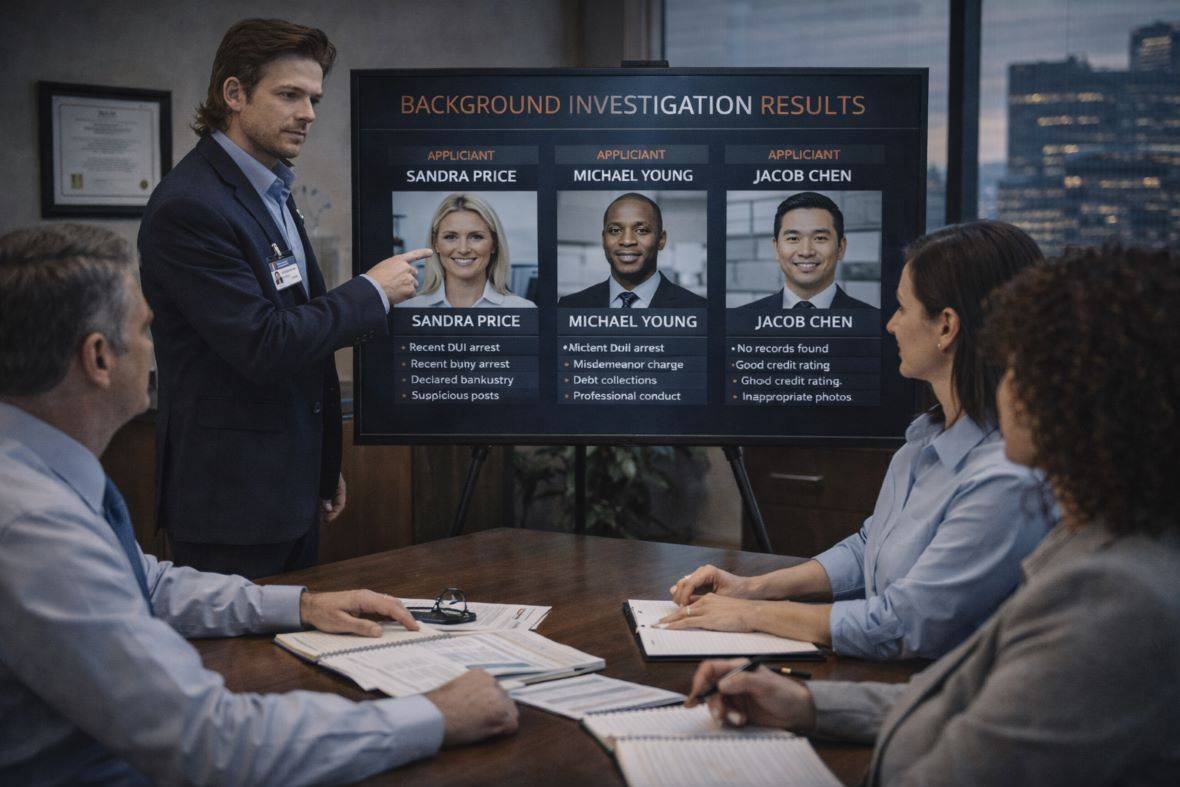
A company record only tells part of the story. The people behind the company matter just as much. Before a deal, it is sensible to test whether a director or principal has a visible history that changes the commercial risk. Official register searches can show whether a person or organisation appears on banned or disqualified registers, which is directly relevant where the credibility of the people behind the transaction is part of the decision.
This kind of check is particularly important when a deal depends heavily on one individual’s reputation, authority, or professional standing. If that person is linked to repeated failures, disqualification issues, or other visible warning signs, the business may need stronger protections, a slower transaction, or a different structure altogether. A private investigator can help by connecting those records to the actual people controlling the deal rather than stopping at a name search alone.
Checking insolvency and financial pressure
Commercial risk is not only about whether someone looks legitimate. It is also about whether they may be under pressure that affects reliability, payment capacity, or the likelihood of a deal collapsing later. In Australia, some personal insolvency proceedings are recorded on the National Personal Insolvency Index, which is a publicly available electronic record. Searches of that register can be relevant where the counterparty’s financial history matters to the deal. (AFSA)
This does not mean every insolvency-related result should end a negotiation. It does mean the result should be understood in context. A private investigator can help place it alongside the broader picture, including timing, business structure, current representations, and whether the proposal carries a level of financial risk that was never disclosed at the outset.
Checking assets and security interests
One of the most overlooked pre-deal checks involves assets. Businesses often assume that equipment, vehicles, stock, or other personal property tied to a deal are free of hidden problems. That assumption can be costly. The PPSR is the official government register of security interests in personal property and works as a public noticeboard for those interests. It is not a register of ownership, but it can show whether relevant personal property is already subject to a secured obligation.
That matters in Sydney transactions involving company assets, financed equipment, vehicles, or business transfers. A private investigator can help identify where a PPSR search is commercially relevant and whether the asset side of the transaction has been presented too simply. If the deal relies on assets already subject to registered interests, this can materially affect value, control, and recovery options later.
Checking the public footprint against the private pitch
Modern due diligence is not only about register searches. It is also about consistency. Publicly available information can reveal whether a company’s digital and commercial footprint matches the claims made in meetings, decks, and emails. A business may present as established and well-resourced, while its visible footprint suggests something much smaller, thinner, or newer. That kind of inconsistency does not prove misconduct, but it is often a reason to keep checking.
This is where online profiling becomes useful. The goal is not gossip or overreach. The goal is to compare claims about experience, scale, location, trading history, and commercial presence against independently verifiable information. When the public-facing picture does not align with the story in the boardroom, it often signals a gap the business should understand before it signs.
Common red flags Sydney businesses should not ignore
Pre-deal red flags are often small in isolation but meaningful in combination. A rushed timeline, reluctance to identify the real decision-maker, inconsistent entity details, unusual pressure to transfer funds, changing business names, unclear director control, or a deal that depends entirely on one persuasive individual can all justify deeper verification. Proper due diligence is about testing those signals before the commitment hardens into a dispute.
The more significant the deal, the less sensible it is to rely on surface trust. A Sydney business entering a partnership, appointing a senior figure, or committing money to a new venture is not being overly cautious by asking harder questions. It is acting proportionately to the risk.
Why a private investigator adds value beyond a basic search

A business owner or manager can run some of these searches personally, and they should. The value of a private investigator is not that the registers are secret. The value lies in the investigator helping turn scattered public clues into a coherent picture of commercial risk. Public data on its own may show that a company exists, that a business name is held, or that a security interest is registered. It does not automatically explain what that means for the proposed deal, how the records connect, or whether the overall story makes sense.
That is especially helpful in Sydney matters, where speed, presentation, and relationship pressure can push businesses to move before they verify. A private investigator can help delay the decision just enough to properly test the facts. In many cases, that is the difference between a manageable commercial risk and a preventable loss.
Conclusion
Sydney businesses do not need to treat every deal like a fraud investigation, but they do need to take due diligence seriously before trust becomes exposure. Company and business-name checks, ABN verification, banned and disqualified register searches, insolvency checks, PPSR searches, and public-footprint review all help reveal whether the business and people behind a proposal are as credible as they appear. Where the deal is significant, a private investigator can help turn those checks into a clearer, evidence-based risk picture before money, reputation, and control are placed at risk. (ASIC; ABR; AFSA; PPSR; AIC)
FAQs
1. What should a Sydney business check before signing a deal?
A Sydney business should usually verify the entity behind the deal, confirm business-name and ABN details, check whether relevant people appear on banned or disqualified registers, consider insolvency-related searches where appropriate, and review whether important assets may already be subject to registered security interests. (ASIC; ABR; AFSA; PPSR)
2. Can a private investigator legally help with due diligence in Australia?
Yes. Private investigators in Australia are commonly used for factual verification and evidence-gathering work in business and legal contexts. In due diligence matters, that can include lawful record checks, public-footprint review, and clarification of inconsistencies that matter to the transaction. (AIC)
3. Does a PPSR search show who owns an asset?
Not exactly. The PPSR is the official government register of security interests in personal property. It acts as a public noticeboard for those interests, but it is not a register of ownership. It is still highly relevant because it can show whether personal property tied to a deal may already be encumbered. (PPSR)
References
Australian Business Register.ABN Lookup. https://abr.business.gov.au/
Australian Business Register. ABN Lookup FAQs. https://abr.business.gov.au/FAQ/ABNLookup
Australian Financial Security Authority. Bankruptcy Register search. https://www.afsa.gov.au/online-services-help/bankruptcy-register-search
Australian Financial Security Authority. National Personal Insolvency Index (NPII). https://www.afsa.gov.au/online-services-help/bankruptcy-register-search/national-personal-insolvency-index-npii
Australian Institute of Criminology. (2000). Private investigators in Australia. https://www.aic.gov.au/crg/reports/crg-1599-00
Australian Securities and Investments Commission. Banned and disqualified registers. https://www.asic.gov.au/online-services/search-asic-registers/banned-and-disqualified-registers/
Australian Securities and Investments Commission. Business names register. https://www.asic.gov.au/online-services/search-asic-registers/business-names-register/
Australian Securities and Investments Commission. Company and organisation registers. https://www.asic.gov.au/online-services/search-asic-registers/company-and-organisation-registers
Business.gov.au. Buy an existing business. https://business.gov.au/planning/new-businesses/buy-an-existing-business
Personal Property Securities Register. About the PPSR. https://www.ppsr.gov.au/about-us/about-ppsr
Personal Property Securities Register. Why register on the PPSR?. https://www.ppsr.gov.au/registering/decide-if-you-should-register-ppsr/why-register-ppsr
Transparency International Australia. Due diligence. https://transparency.org.au/due-diligence/