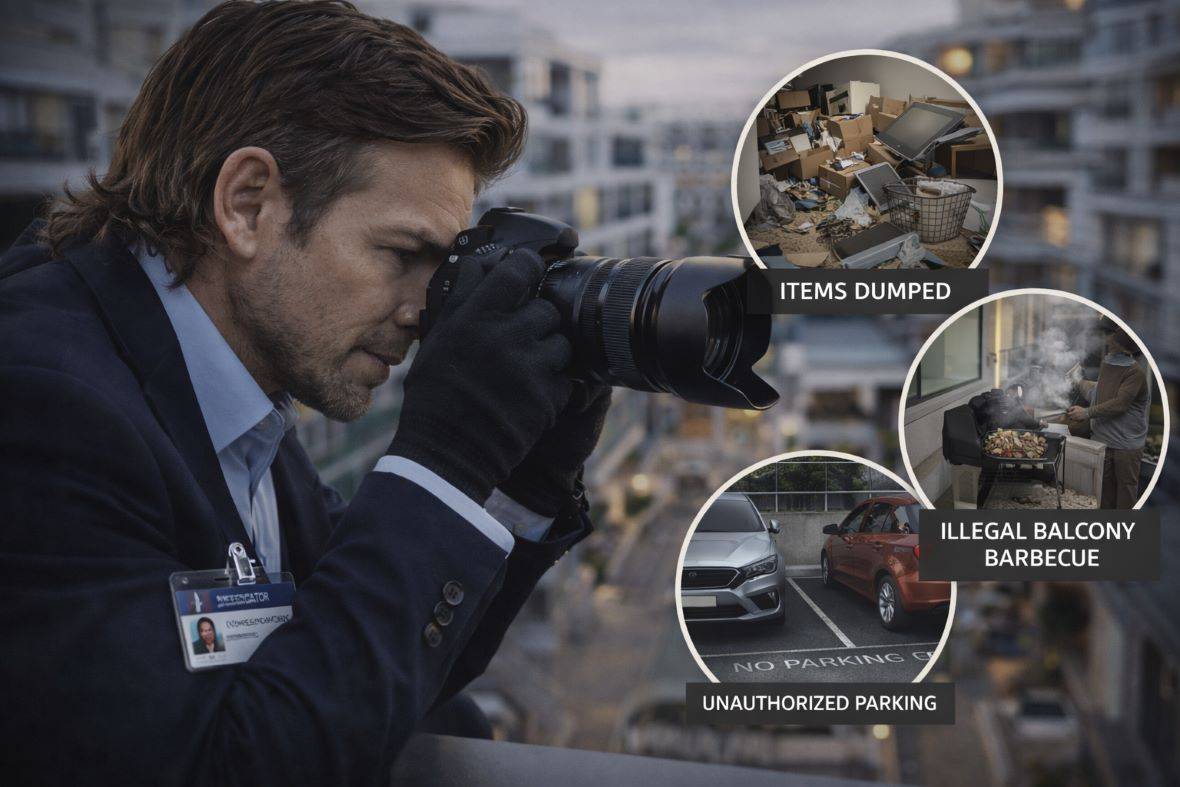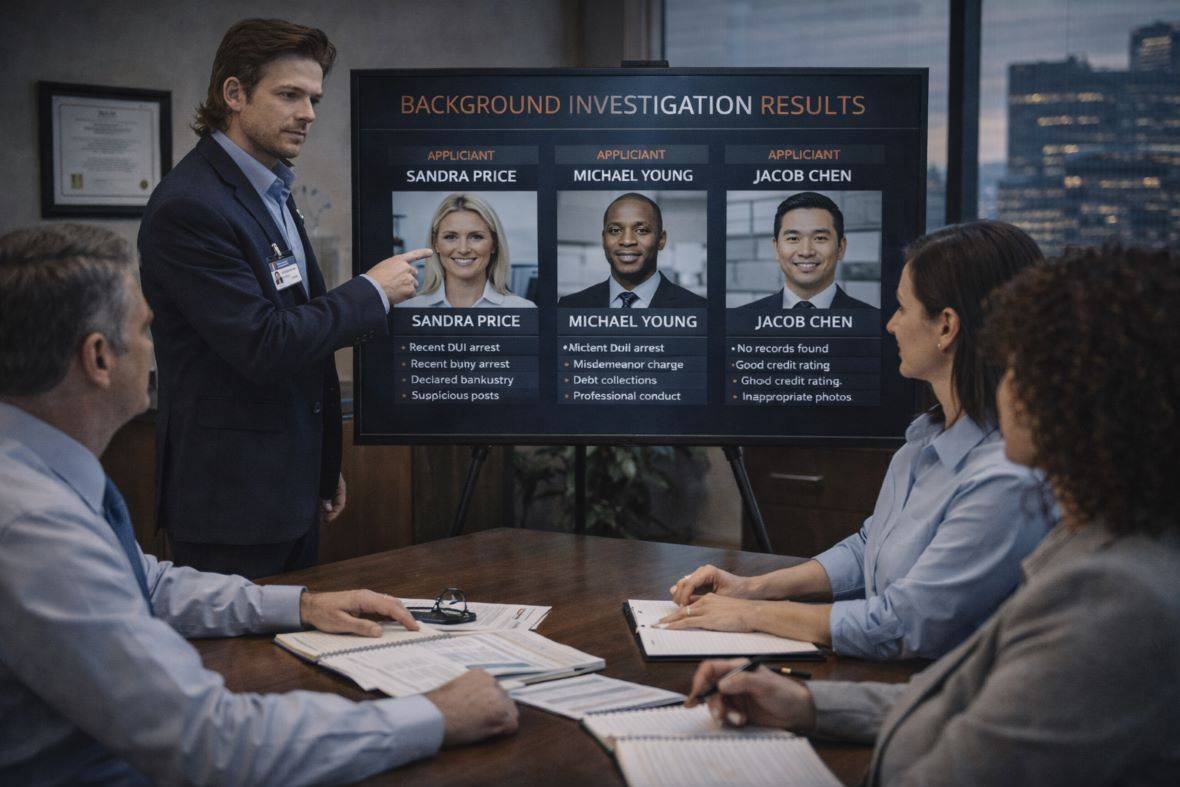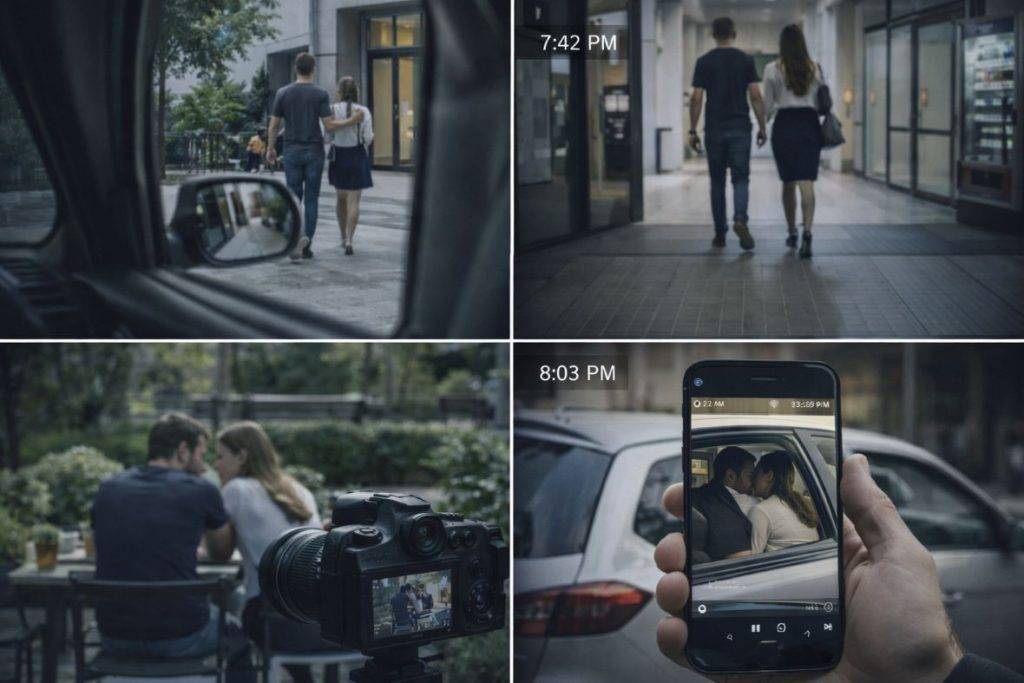
You have a video, a photo sequence, or a recording that seems to settle the dispute. The problem is that the court is not interested in “gotcha” evidence. The court is interested in evidence that was gathered lawfully, is reliable, and can be used fairly.
“Surveillance evidence” can include photos, video, audio recordings, GPS or tracker data, social media screenshots, messages, and access logs. In Australia, there are two big hurdles. First, the recording or monitoring must be lawful under your state or territory’s surveillance and privacy rules. Second, it must be admitted under the evidence rules, which give judges considerable discretion.
If you are seeking assistance, a private investigator in Australia can help gather this evidence lawfully and ensure it meets the necessary requirements for the court. In Australia, surveillance evidence usually has to clear two hurdles.
The two tests courts apply: was it collected legally, and is it admissible?
People often confuse “legal to record” with “allowed in court.” They overlap, but they are not the same thing.
Under the Evidence Act framework, the starting point is relevance. Evidence is relevant if it could rationally affect the assessment of a fact in issue (Evidence Act s 55), and relevant evidence is generally admissible unless another rule excludes it (s 56).
Even when evidence is relevant, courts can still keep it out for fairness and reliability reasons. Two common filters are:
- General exclusion discretion (s 135): a court may refuse evidence if probative value is substantially outweighed by risks like unfair prejudice, confusion, misleading the court, or wasting time.
- Mandatory exclusion in criminal proceedings (s 137): the court must refuse to admit prosecution evidence if its probative value is outweighed by the danger of unfair prejudice.
If the evidence was obtained improperly or illegally, the key provision is s 138, which sets a balancing test. Evidence obtained improperly or in contravention of an Australian law is not to be admitted unless the desirability of admitting it outweighs the undesirability of admitting evidence obtained that way.
This is why “true” footage can still fail. A clip can be real and still be excluded if it is unfair, misleading, lacks context, or was gathered through a serious breach of privacy.
What usually makes surveillance legal, and what usually makes it illegal
Surveillance law in Australia is mostly state and territory-based. The details vary, but one pattern is consistent: the law is generally tougher on recording private audio than filming what is openly visible. Private investigators operating in Australia must navigate these laws carefully, as recording conversations without consent can lead to serious legal repercussions.
Private conversations and audio are high risk
In NSW, the Surveillance Devices Act 2007 regulates listening devices and private conversations. Section 7 prohibits the use of a listening device to record a private conversation, subject to defined exceptions.
Across Australia, exceptions are not identical. The ALRC notes that some jurisdictions generally require all-party consent for private conversations, while others allow one-party consent in limited circumstances, and that exceptions often exist (for example, where consent is present, or where the recorder is a party to the conversation in certain jurisdictions).
Practical takeaway: if your plan depends on secret audio, you are taking the highest legal risk category.
Private places matter, even without audio
Filming into homes, bathrooms, change rooms, or other sensitive spaces is far more likely to raise legal issues because privacy expectations are stronger. Even where you stand in a lawful public spot, “aiming into” a private place can be a problem depending on the circumstances and local law.
Workplace surveillance has extra rules in NSW
If the surveillance involves an employee’s workplace in NSW, the Workplace Surveillance Act 2005 adds notice requirements. It generally requires prior written notice (at least 14 days unless the employee agrees otherwise), and camera surveillance must have clearly visible cameras or casings plus signage notifying people they may be under surveillance.
That matters because evidence gathered in breach of a workplace statute can become “improperly obtained” evidence issues later under Evidence Act principles.
Phone interception is a separate red line
Intercepting telecommunications is not “surveillance” in the casual sense. The Telecommunications (Interception and Access) Act makes it an offence to intercept communications without authorisation (s 7), and Home Affairs explains that lawful interception is tightly controlled through warrants and specific legal pathways.
What makes surveillance usable in court, even if there is a legality issue
If evidence is arguably unlawful, courts can still consider admission under s 138. That does not make illegality a strategy. It makes it a risk.
Courts typically weigh things like:
- how important the evidence is to a key issue
- the seriousness and deliberateness of the breach
- whether the evidence could have been obtained lawfully
- the effect on fairness
The ALRC summarises s 138 as a balancing test that applies in civil and criminal proceedings.
The NSW Judicial Commission benchbook also explains how Pt 3.11 exclusions and fairness concepts operate, including a discussion of s 138 not being confined to criminal proceedings.
How a Private Investigator can collect surveillance that stands up to scrutiny
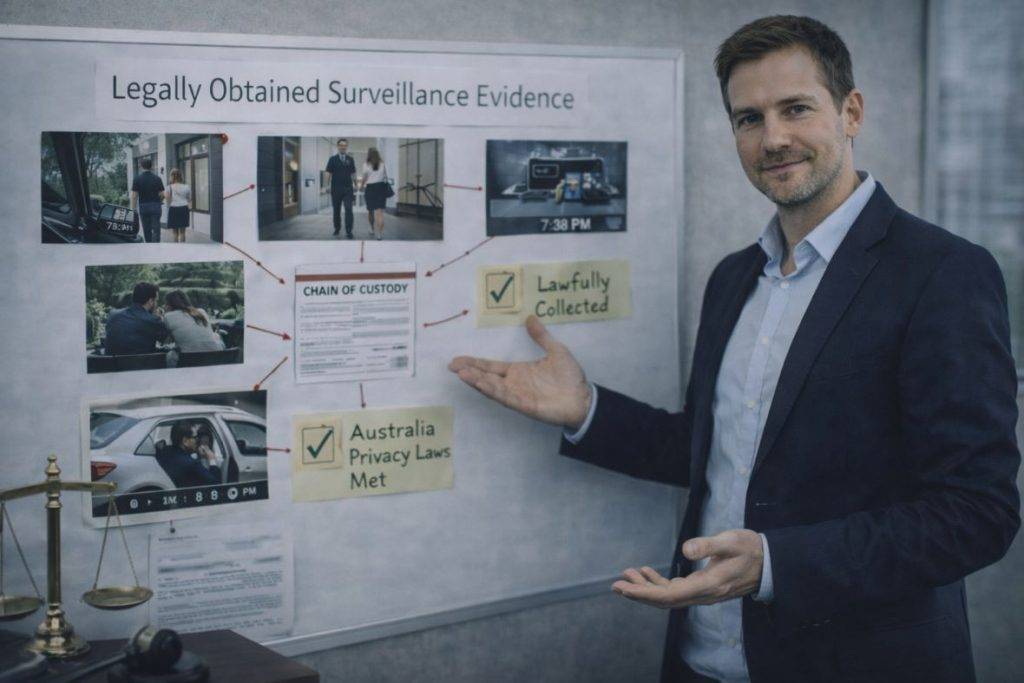
Good surveillance is boring on purpose. It is calm, lawful, relevant, and easy to explain.
A court-safe approach usually looks like this:
- Define the fact to be proved (not the story you want to tell).
- Use the least intrusive method that can prove it.
- Gather only what is necessary and relevant.
- Preserve originals and document context.
This approach reduces both legal risk and admissibility risk.
Best practices that protect the chain of custody and credibility
Courts trust evidence more when its handling is clear and disciplined.
Digital evidence standards focus on identification, collection, acquisition, and preservation:
- ISO/IEC 27037 sets guidelines for handling digital evidence, including identification, collection, acquisition, and preservation.
- NIST SP 800-86 provides practical forensic guidance and stresses careful handling and documentation in forensic processes.
- An Australian tribunal-focused paper on “Evidence from a digital device” discusses admissibility issues and practical handling concerns in litigation contexts.
In plain English, the habits that help most are:
- keep original files (do not rely on screenshots)
- preserve metadata where possible
- avoid edits, filters, captions, or highlight reels
- keep contemporaneous notes (time, location, who captured it)
- store evidence securely with controlled access
- build a simple timeline so clips do not float without context
Common mistakes that get surveillance thrown out
These are the repeat offenders:
- secret audio of a private conversation without a lawful basis (high legal exposure in NSW)
- filming into private areas, or breaching workplace notice/signage rules
- trespass, harassment, or provocation to “create” footage
- selective editing that makes the clip misleading (s 135 risk)
- missing timestamps, missing source details, and weak chain of custody
Real court examples and quick FAQs (so you know what to expect)
Courts tend to reward the same themes: lawful collection, clear relevance, and fair presentation.
Court snapshots: when surveillance was allowed, and when it was excluded
- Dong v Song [2018] ACTSC 82: This decision is often discussed in relation to statutory exceptions that can apply to recordings made to protect lawful interests. The takeaway is narrow, a claimed exception still needs facts to support it, and it doesn’t excuse sloppy or excessive recording.
- Krav Maga Defence v Markovitch (NSW): Reported disputes about workplace CCTV and notice show how quickly surveillance arguments can turn on compliance details. Even when footage seems helpful, poor processes create room for challenges to fairness and legality.
- Family law situations: Courts sometimes allow recordings when safety concerns (such as family violence or child welfare) make obtaining evidence difficult. Still, they can reject long, inflammatory, or heavily edited material. The “snapshot problem” is real; hours of audio rarely land the way people expect.
Conclusion
Surveillance evidence becomes usable when it clears two hurdles: compliance with the relevant surveillance and privacy rules, and admissibility under evidence rules that focus on relevance, reliability, and fairness. Evidence Act provisions on relevance (ss 55–56), discretionary and mandatory exclusions (ss 135 and 137), and illegally or improperly obtained evidence (s 138) are central to that analysis.
If the stakes are high, speak with a lawyer first. Then work with a properly licensed private investigator who can explain what they can and cannot do. The best evidence is the evidence you can defend.
FAQ: common questions about legal, usable surveillance evidence
Can a Private Investigator legally record audio in Australia?
It depends on the state or territory and the situation. Audio is tightly regulated, and consent or a clear legal basis is usually required.
Is video in public automatically legal and admissible?
Often, it’s lawful to film from a legal position, but admissibility still depends on relevance, accuracy, and whether other unlawful conduct occurred.
Will a judge use illegally obtained surveillance anyway?
Sometimes, but it’s not guaranteed. Courts may admit it after a balancing test, yet deliberate breaches can lead to exclusion and other consequences.
What should I do before hiring a PI for surveillance?
Confirm licensing, ask how they’ll stay compliant, and agree on clear boundaries in writing.
References
Australian Law Reform Commission. (2010). Exclusion of improperly or illegally obtained evidence. In Uniform Evidence Law (ALRC Report 102). https://www.alrc.gov.au/publication/uniform-evidence-law-alrc-report-102/16-discretionary-and-mandatory-exclusions/exclusion-of-improperly-or-illegally-obtained-evidence/
Australian Law Reform Commission. (2010). Exclusions pursuant to ss 135 and 137. In Uniform Evidence Law (ALRC Report 102). https://www.alrc.gov.au/publication/uniform-evidence-law-alrc-report-102/16-discretionary-and-mandatory-exclusions/exclusions-pursuant-to-ss-135-and-137/
Dong v Song [2018] ACTSC 82. https://www.courts.act.gov.au/__data/assets/pdf_file/0005/1184198/Dong-.pdf
International Organization for Standardization. (2012). ISO/IEC 27037:2012 Information technology, Security techniques, Guidelines for identification, collection, acquisition and preservation of digital evidence. https://www.iso.org/standard/44381.html
Judicial Commission of New South Wales. (2025). Discretions to exclude evidence (Civil Trial Bench Book). https://www.judcom.nsw.gov.au/publications/benchbks/civil/discretions_to_exclude_evidence.html
Kent, K., Chevalier, S., Grance, T., & Dang, H. (2006). Guide to integrating forensic techniques into incident response (NIST Special Publication 800-86). National Institute of Standards and Technology. https://nvlpubs.nist.gov/nistpubs/legacy/sp/nistspecialpublication800-86.pdf
New South Wales Government. (2007). Surveillance Devices Act 2007 (NSW). https://legislation.nsw.gov.au/view/whole/html/inforce/current/act-2007-064
New South Wales Government. (2005). Workplace Surveillance Act 2005 (NSW). https://legislation.nsw.gov.au/view/whole/html/inforce/current/act-2005-047
New South Wales Government. (1995). Evidence Act 1995 (NSW). https://legislation.nsw.gov.au/view/whole/html/inforce/current/act-1995-025
Parliament of Australia. (1979). Telecommunications (Interception and Access) Act 1979 (Cth). https://classic.austlii.edu.au/au/legis/cth/consol_act/taaa1979410/s7.html
Australian Government, Department of Home Affairs. (n.d.). Telecommunications interception and surveillance. https://www.homeaffairs.gov.au/about-us/our-portfolios/national-security/lawful-access-telecommunications/telecommunications-interception-and-surveillance
Kumar, M. (2016). Evidence from a digital device. Council of Australasian Tribunals (NSW) Annual Conference paper. https://coat.asn.au/wp-content/uploads/2018/11/Evidence-from-a-digital-device-Miiko-Kumar.pdf